Endotracheal Tube
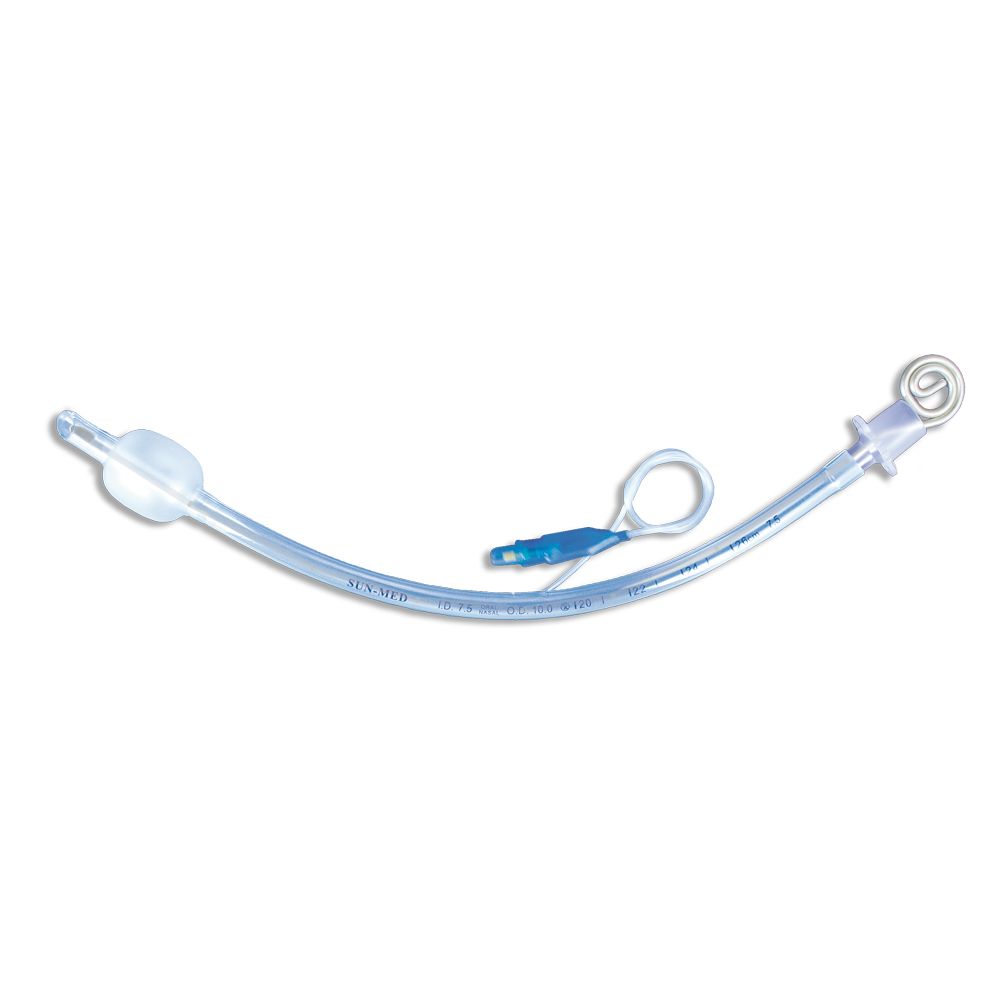
The Endotracheal Tube (ETT) is the primary intubation device used to secure the patient's airway by inserting it into the trachea, maintain airway patency, and administer mechanical ventilation if necessary. It is an indispensable piece of equipment for difficult airway management, general anesthesia, resuscitation, trauma, and critical care procedures. It is one of the most critical advanced airway devices used as a standard in emergency medicine, operating room, intensive care, PHTLS, and TCCC protocols.
Purposes
• Ensuring a secure airway in patients with upper airway obstruction
• Administering positive pressure ventilation in respiratory failure
• Managing patient breathing under general anesthesia
• Stabilizing the airway in trauma and critical situations
• Reducing the risk of aspiration (with balloon models)
Advantages
• Atraumatic rounded tip: Reduces the risk of tissue damage during insertion.
• Murphy Eye design: Helps prevent obstruction; provides an alternative airway.
• Radiopaque line: Provides visibility for position verification on X-ray. • Body depth markings: Allows easy control of intubation depth.
• High volume – low pressure cuff (balloon models): Minimizes tracheal pressure while maintaining a tubal seal.
• Universal 15 mm connector: Compatible with all ventilation and breathing devices.
• Latex-free: Reduces the risk of allergic reactions.
• Disposable: Hygienic and safe use.
Technical Specifications
• Material: Medical PVC, latex/rubber-free
• Body: Depth markings available
• Viewability: Radiopaque stripes
• Usage: Single-use
• Tip: Atraumatic rounded distal tip
• Murphy Eye: Additional airway opening at the distal tip
• Balloon models: High volume/low pressure cuff + pilot balloon with valve
• Connection: Universal 15 mm connector
Purposes
• Ensuring a secure airway in patients with upper airway obstruction
• Administering positive pressure ventilation in respiratory failure
• Managing patient breathing under general anesthesia
• Stabilizing the airway in trauma and critical situations
• Reducing the risk of aspiration (with balloon models)
Advantages
• Atraumatic rounded tip: Reduces the risk of tissue damage during insertion.
• Murphy Eye design: Helps prevent obstruction; provides an alternative airway.
• Radiopaque line: Provides visibility for position verification on X-ray. • Body depth markings: Allows easy control of intubation depth.
• High volume – low pressure cuff (balloon models): Minimizes tracheal pressure while maintaining a tubal seal.
• Universal 15 mm connector: Compatible with all ventilation and breathing devices.
• Latex-free: Reduces the risk of allergic reactions.
• Disposable: Hygienic and safe use.
Technical Specifications
• Material: Medical PVC, latex/rubber-free
• Body: Depth markings available
• Viewability: Radiopaque stripes
• Usage: Single-use
• Tip: Atraumatic rounded distal tip
• Murphy Eye: Additional airway opening at the distal tip
• Balloon models: High volume/low pressure cuff + pilot balloon with valve
• Connection: Universal 15 mm connector
- Be the first to review this product

Türkçe